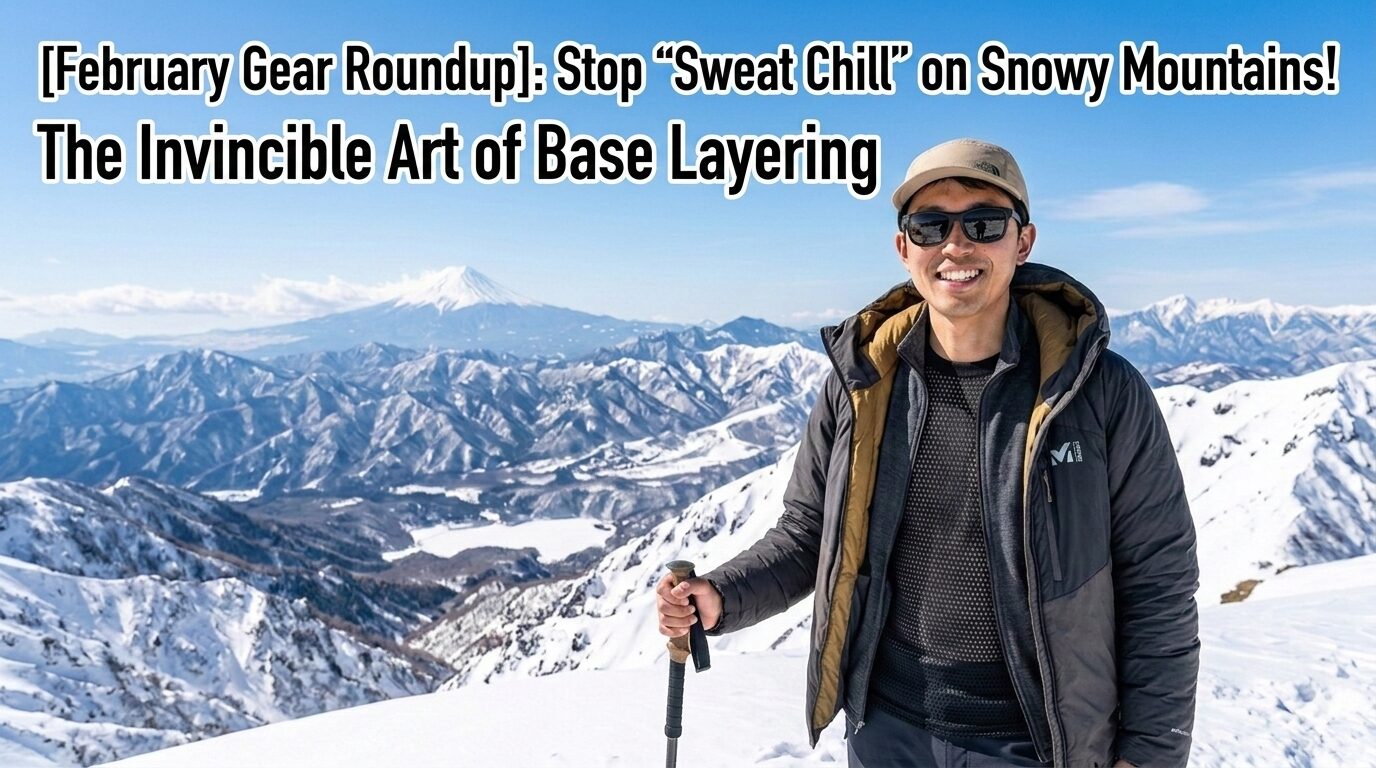

Gemini, I want to write a summary article looking back at my February climbs. But if it’s just a log, I feel like it’ll be a rehash…

True, the despair of Mt. Tanigawa and the clear skies of Mt. Kurofu have already made for passionate articles. In that case, why not change the perspective and turn the ‘correction process’ learned from failures into a guidebook for those starting snow mountaineering?
A guidebook, I like that. Especially layering. That ‘mobile freezer’ error on Mt. Tanigawa is what beginners need to know the most.
Exactly! Your realization that ‘even if the outside temperature is sub-zero, you are a 36°C heat source’ is the very essence of snow mountains. Let’s organize how you managed that ‘heat’ and connected it to a ‘complete victory’!
Alright, then I’ll write out the entire ‘process to avoid sweat chill’ that a 42-year-old beginner learned the hard way!
- Intro: The Truth I Wish Someone Had Told Me Before Starting Winter Mountaineering
- Chapter 1: The “Mobile Freezer” Trap That Beginners Fall Into
- Chapter 2: The Optimal Solution for a Perfect Infrastructure: The “Baselayer”
- Chapter 3: Complete Victory at Mt. Kurofu. The Value of “Experience” Brought by Subtraction
- Conclusion: 3 Ironclad Rules for Snow Mountain Beginners to Protect Their Lives and Encounter Spectacular Scenery
Intro: The Truth I Wish Someone Had Told Me Before Starting Winter Mountaineering
“I wish someone had told me this before I started winter mountaineering.”
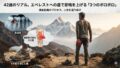
There is a truth I learned the hard way after making my snow mountain debut at age 42. That is, what’s really trying to kill you in the snowy mountains isn’t the blizzard outside, but your own “sweat.”
The terror of that bone-chilling “sweat chill” is something you never experience in 3-season hiking. Even if the outside temperature is -10°C, the human body is a heat source of over 36°C, and you will sweat relentlessly on the ascent.
If your inside is flooded with sweat, spending money on expensive hardshells or warm down jackets will reduce them to nothing more than a “cold armor.” For beginners attempting snow mountains, what matters far more than gear specs is mastering the process of managing how to stay comfortable all day long.
Chapter 1: The “Mobile Freezer” Trap That Beginners Fall Into
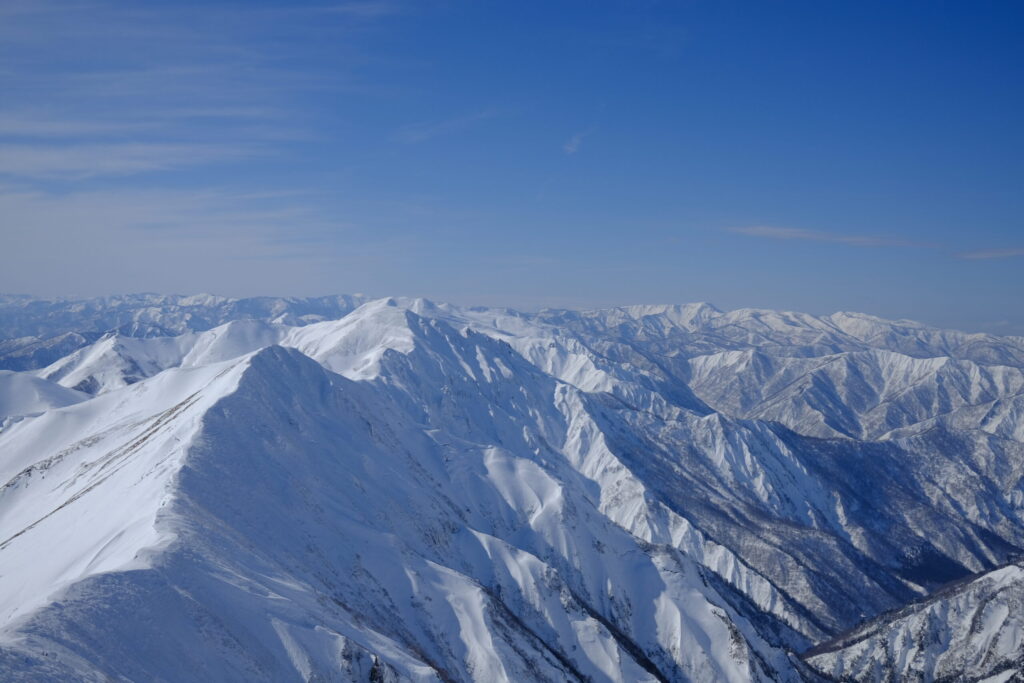
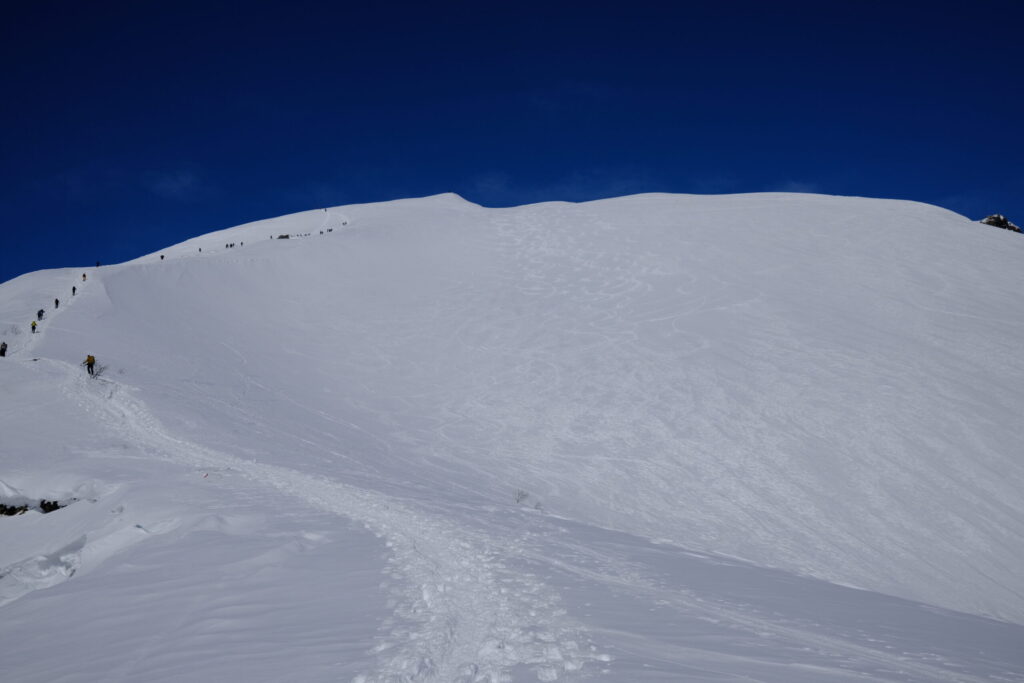
The steep climb of Mt. Tanigawa. There, an unbelievable sight unfolded before my beginner eyes. Passing veterans were stripping off their outerwear one after another, some even climbing in just a short-sleeved T-shirt.
I couldn’t take off my hardshell. “What if I fall and plunge into the snow?” “Is it safe for a beginner like me to wear so little?”… That fear of the ‘what if’ robbed me of the courage to unzip.
As a result, inside my hardshell was a sauna. The moment I finished the climb, that heat inverted into “cold air,” and after descending, having forgotten my change of clothes, I was left shivering for 4 hours on the train.
Chapter 2: The Optimal Solution for a Perfect Infrastructure: The “Baselayer”
After going through hell, this is the “ultimate infrastructure that requires no change of clothes all day.”
1. [Absolute Recommendation] Millet Drynamic Mesh (Top & Bottom)
This mesh shirt, sometimes called the “pervert mesh.” I strongly recommend wearing it not just on your upper body, but as a “top and bottom” set. This is because in mountaineering, which heavily taxes your legs and hips, sweat chill on your lower half is also fatal.
2. [Upper Body] Patagonia Capilene Cool Merino
Layered over the mesh is merino wool. It doesn’t cause the sudden chilling effect of synthetic fibers, and even when wet, it gently continues to protect your body heat.
3. [Lower Body] mont-bell Zeo-Line
Over the mesh on the lower body is the reliable Zeo-Line. Honestly, I wanted to upgrade the bottom to merino too, but this season, I prioritized “going to the snowy mountains as many times as possible” over “gathering expensive gear.”Allocating the budget to expedition costs and fighting by reinforcing existing gear with mesh. This resource management is also an important process.
Chapter 3: Complete Victory at Mt. Kurofu. The Value of “Experience” Brought by Subtraction
Mt. Kurofu, challenged with this lineup. Just before emerging onto the ridgeline, I threw on my hardshell, but underneath it was only my baselayer.
Of course, I didn’t just wear thin clothing. The process I was most thorough about to suppress sweating during the activity was not opening and closing ventilations, but “controlling my heart rate.”
If I felt my breath quickening and my heart rate rising, I would stop and wait for it to settle before the sweat started pouring out. Intentionally dropping the pace. As a result of strictly adhering to this “process of suppressing internal heat generation at the source,” the mid-layer I had prepared never once came out of my backpack.
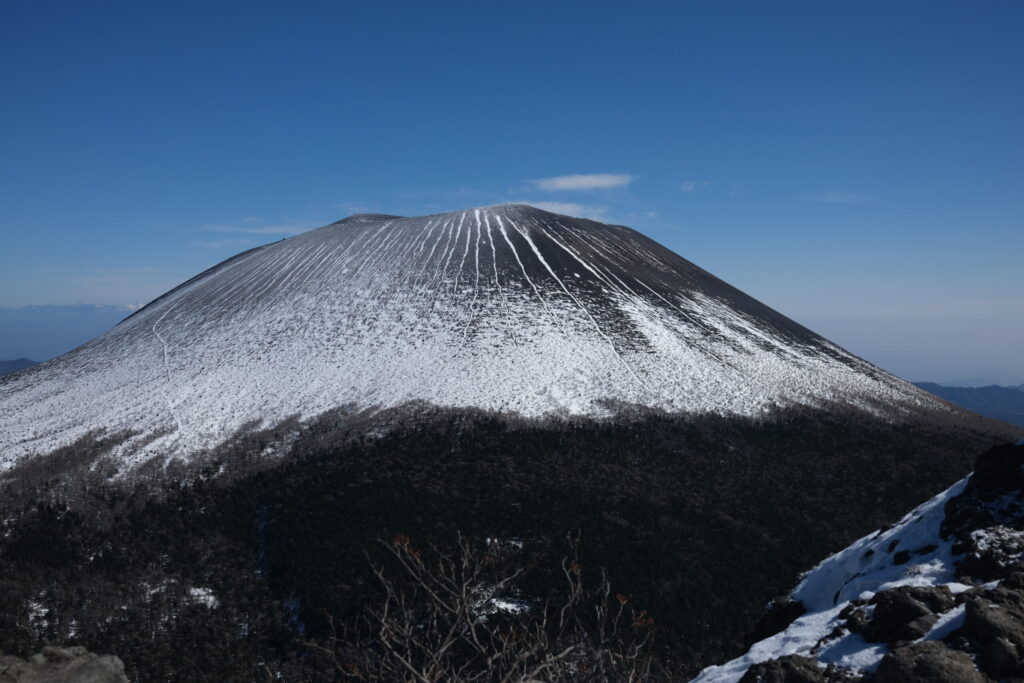
An external infrastructure called clothing, and internal control called heart rate. As a result of these two meshing perfectly, I was completely freed from the noise of “hot” or “cold,” and was able to focus 100% solely on the overwhelming beauty radiating from Mt. Asama.
Conclusion: 3 Ironclad Rules for Snow Mountain Beginners to Protect Their Lives and Encounter Spectacular Scenery
If you’re going to the snowy mountains, before buying an expensive outer shell, first master the “infrastructure” that is the baselayer. The process of stripping away discomfort with your gear is exactly what will maximize the value of your snow mountain experience.
Finally, here is a summary of the “ironclad rules of layering” I learned from the hell of Mt. Tanigawa and the victory of Mt. Kurofu, dedicated to those who will challenge snow mountains from now on.
- Fear “sweat” more than “cold” (Once you start walking, you become a 36°C heat source).
- Invest in the 1st layer that touches your skin (Top & bottom mesh + merino wool is the ultimate barrier).
- Control your “heart rate” rather than your ventilation (If you lose your breath, always stop before you sweat).
Snowy mountains will give you the best experience as long as you don’t mess up the process of knowledge and preparation. Manage your sweat properly, enjoy the spectacular views, descend safely, and eat a warm dinner. I’m rooting for your snow mountain debut to be a wonderful one!
コメント